The Core Challenge:
From Chaos to Control
Maritime medical operations were fragmented across disconnected systems, spreadsheets, email threads, and manual documentation processes.
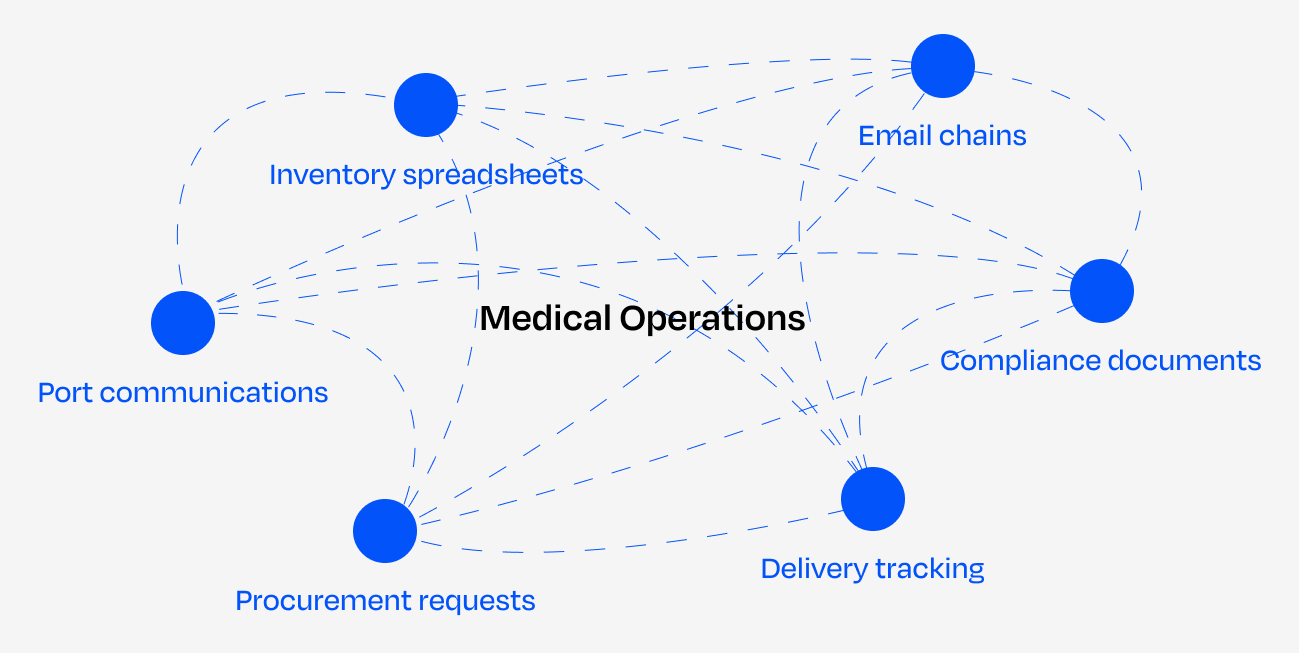

Teams lacked visibility into:
• Vessel compliance status
• Inventory readiness
• Order fulfillment
• Certification risks
• Medical supply availability
This created operational blind spots and increased compliance risk.
The primary UX hurdle was bridging the operational asymmetry between highly technical shore-side managers (focused on procurement and regulatory audits) and ship-side crews operating under high stress with low internet bandwidth.
Understanding the Ecosystem
Multi-Persona Ecosystem Mapping
The challenge wasn't simply designing software.
It was creating a shared operational system for multiple user groups with different goals and responsibilities.
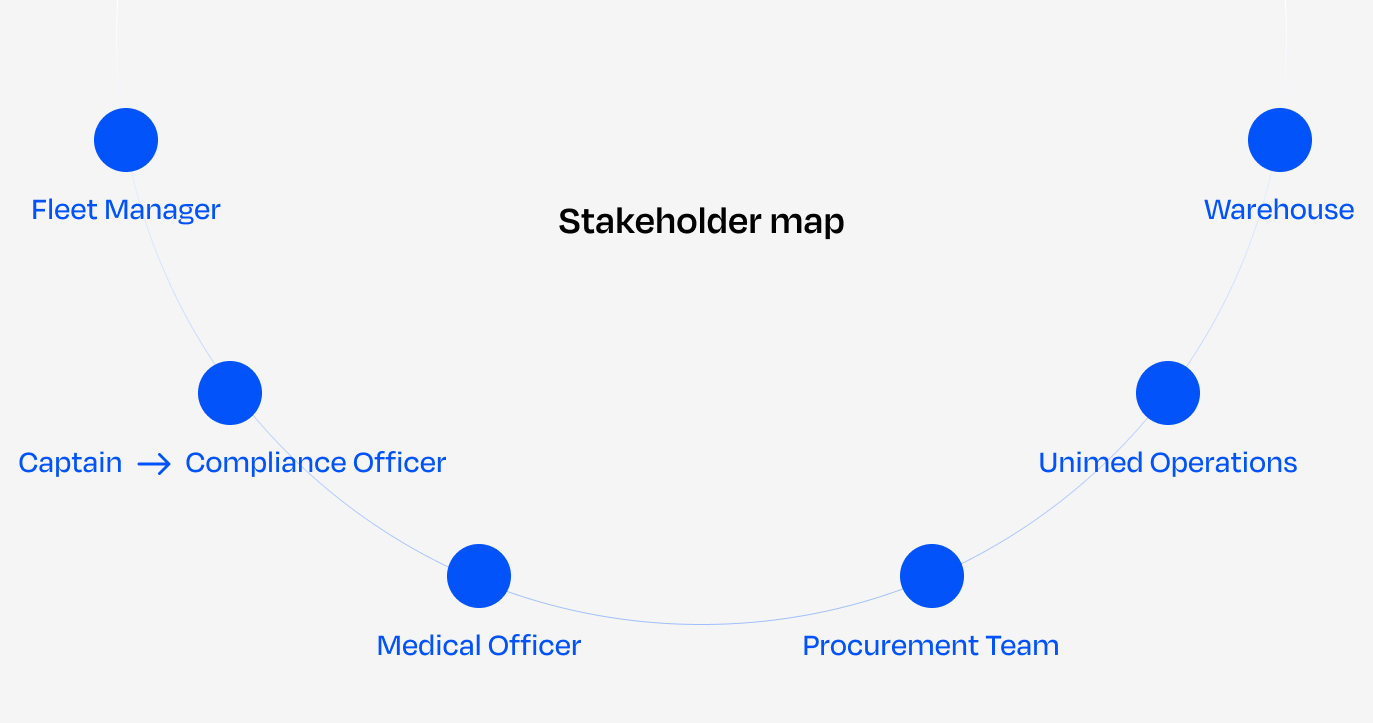
Key personas included:

Vessel Captain
Voyage readiness and fast verification
Vessel Compliance Dashboard

Medical Officer
Supply tracking and expiration prevention
Smart Inventory Portal

Procurement Officer
Order optimization and margin protection
Centralized B2B Order Flow

Compliance Officer
Audit generation and risk mitigation
Instant Audit Packets
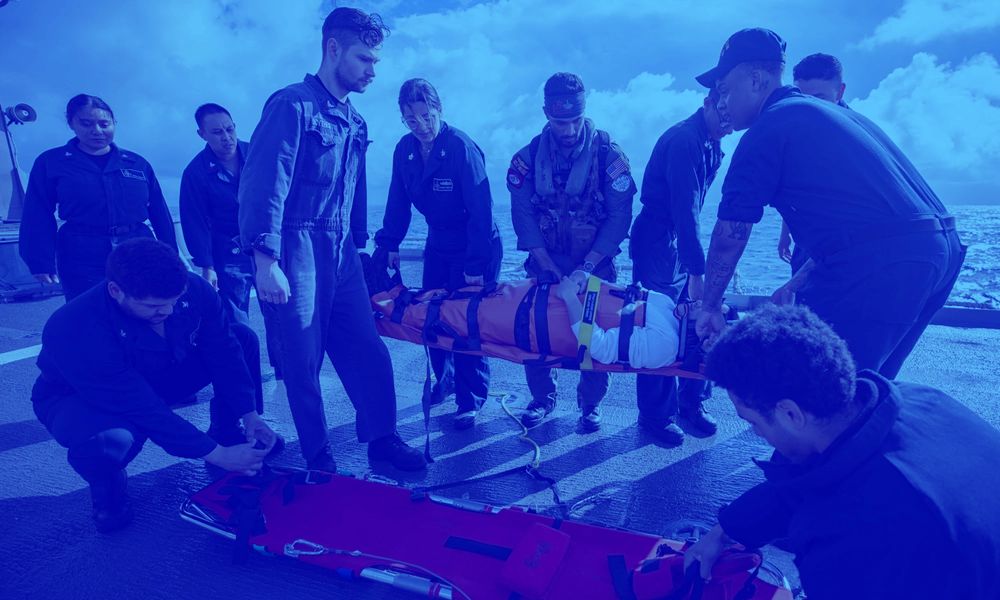

System Architecture & User Journey Flows
To scale across enterprise accounts, we designed an end-to-end journey that moves from initial risk assessment to transaction fulfillment seamlessly.


Key Feature Deep-Dive & UI Architecture
Pillar A: The Vessel Compliance Radar
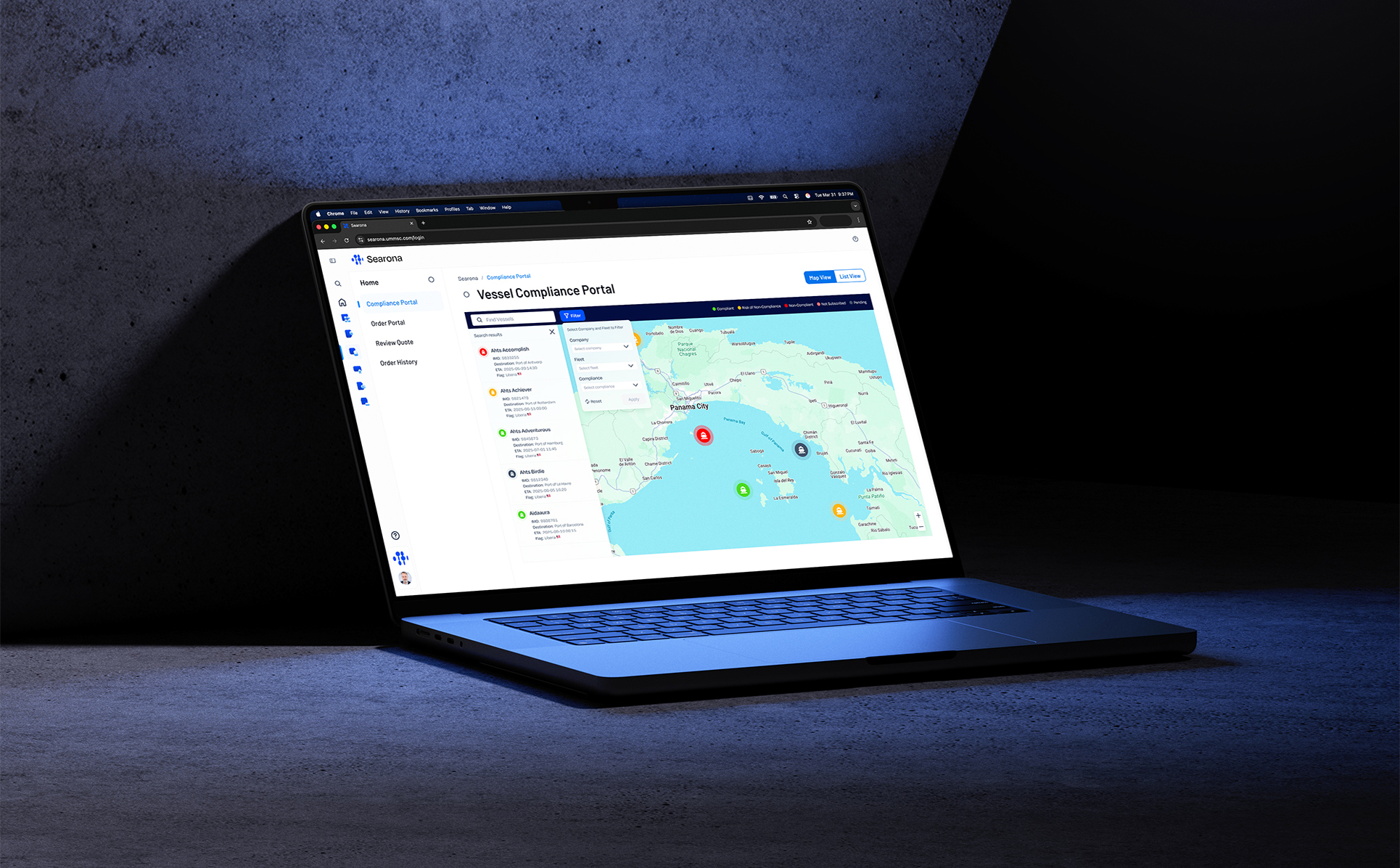
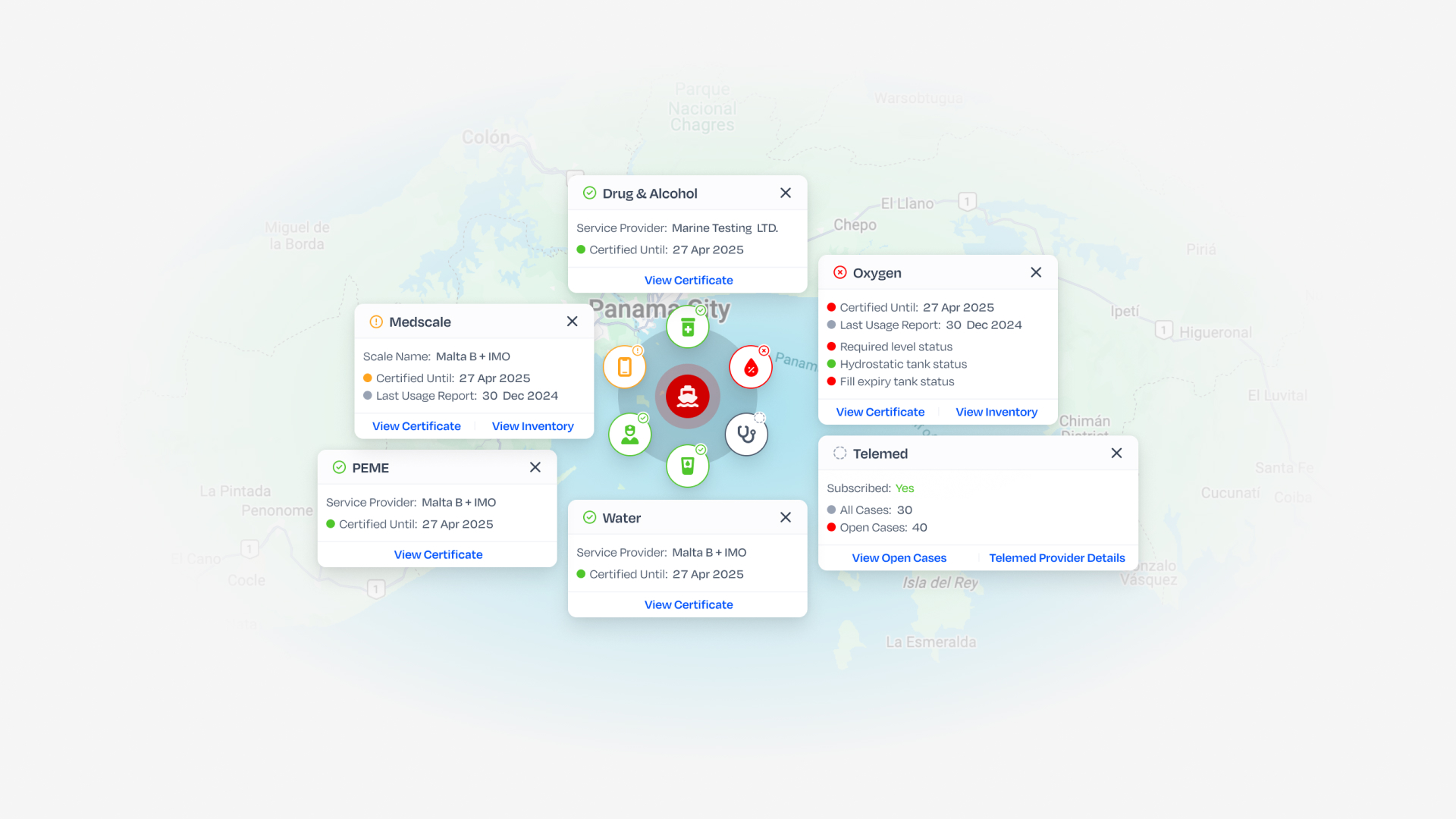
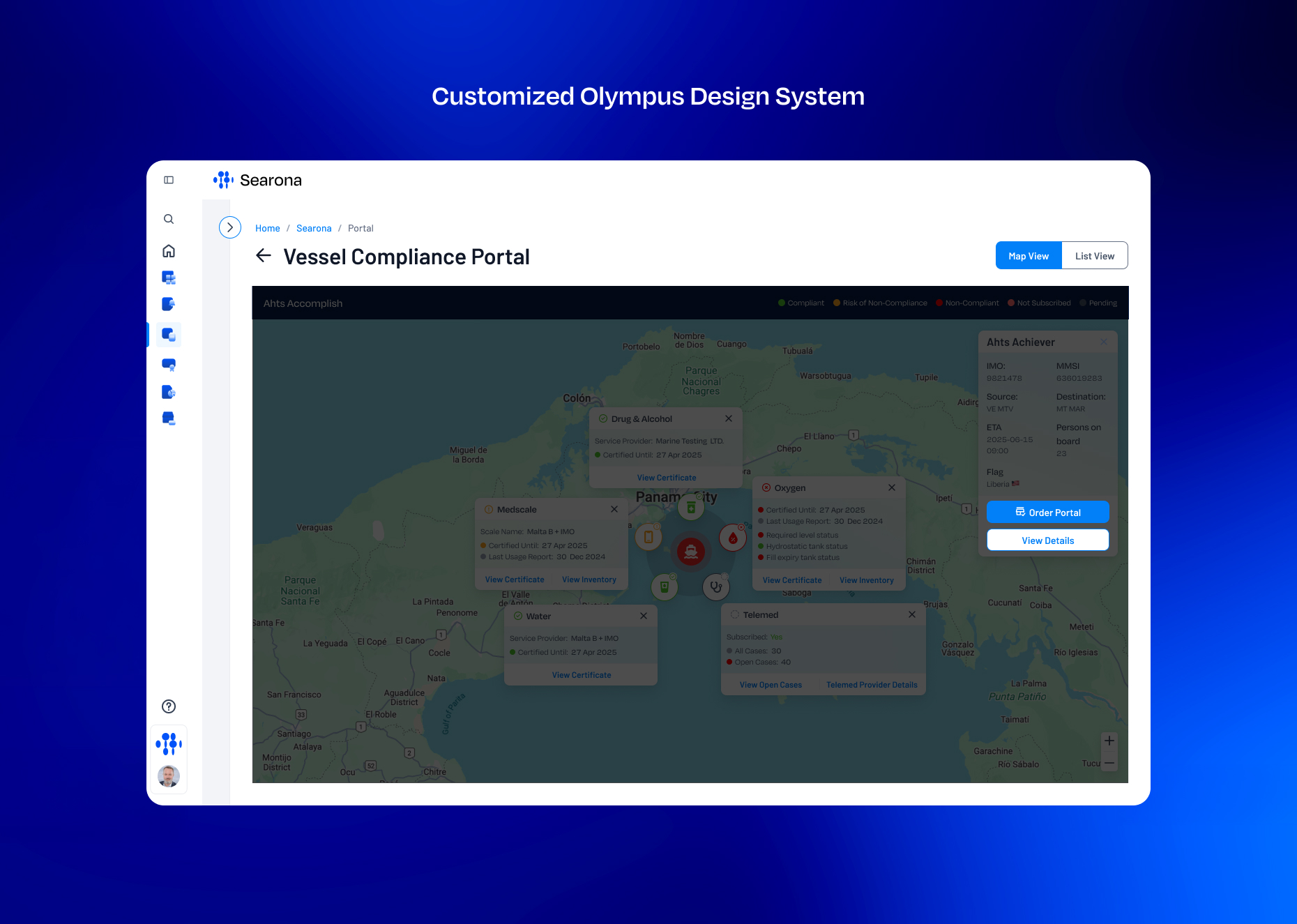
Moving users away from endless rows of spreadsheet numbers. We chose a localized geographic visualization. Fleets are displayed on a global layout, color-coded instantly by systemic risk indicators.
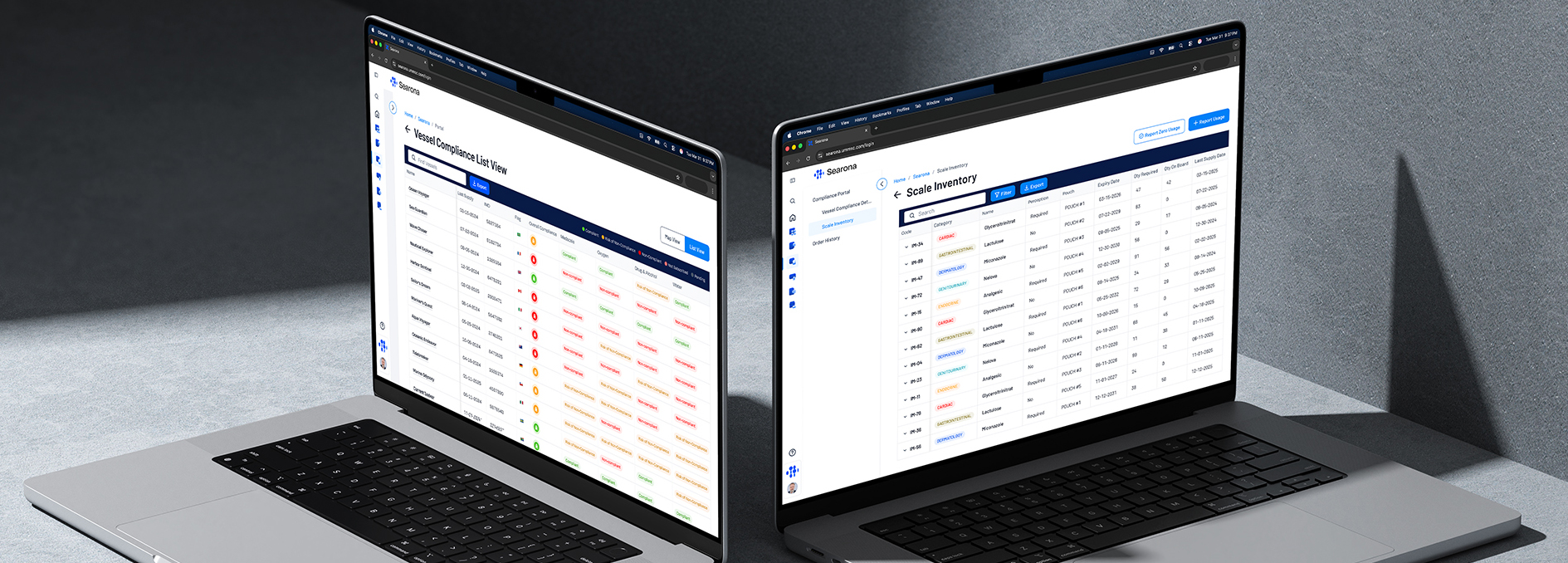
The Compliance Dashboard was designed to provide an immediate understanding of fleet-wide medical readiness. Rather than requiring users to navigate multiple systems or documents, the dashboard surfaces the most critical operational information in a single view.
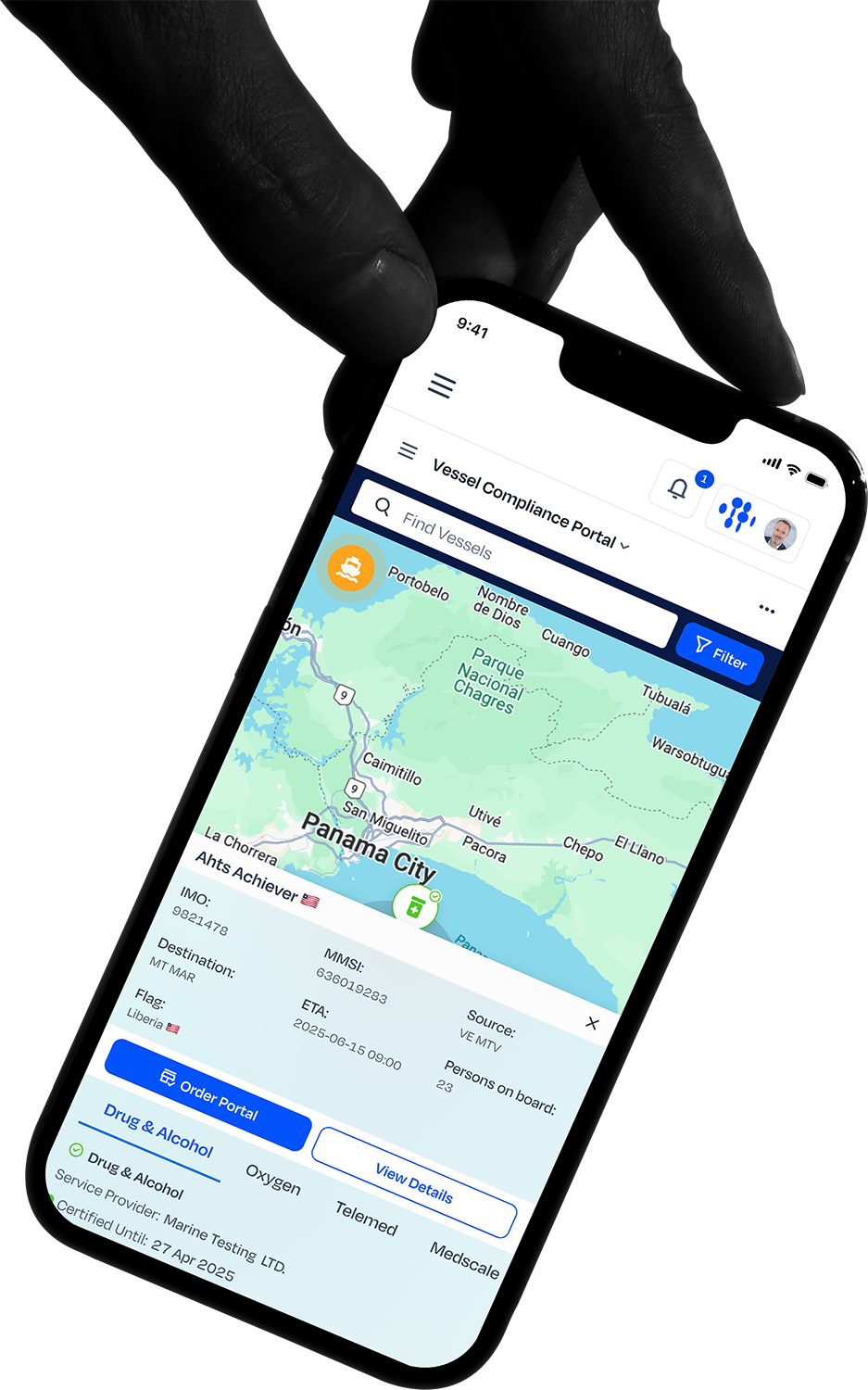

An interactive vessel map allows users to quickly identify compliance status across their fleet, while visual indicators highlight certificates, inventory health, and inspection risks before they become operational issues.
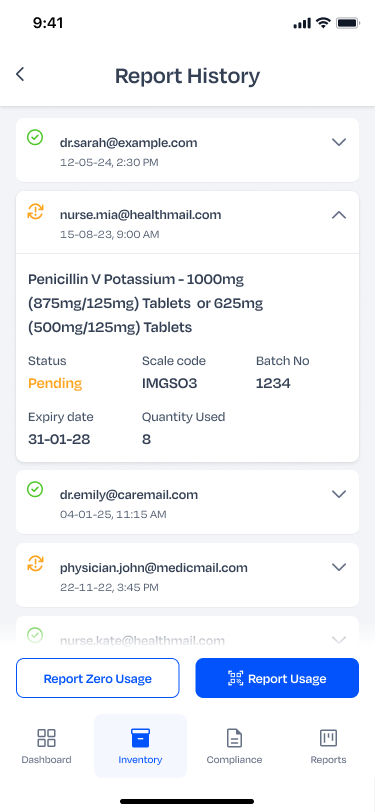
Frequently used actions (including reporting medical usage, viewing certificates, and accessing inventory) are available directly from the dashboard to reduce navigation and improve task efficiency.
.jpg)
Pillar B:
The B2B Ad-Hoc Order Management System
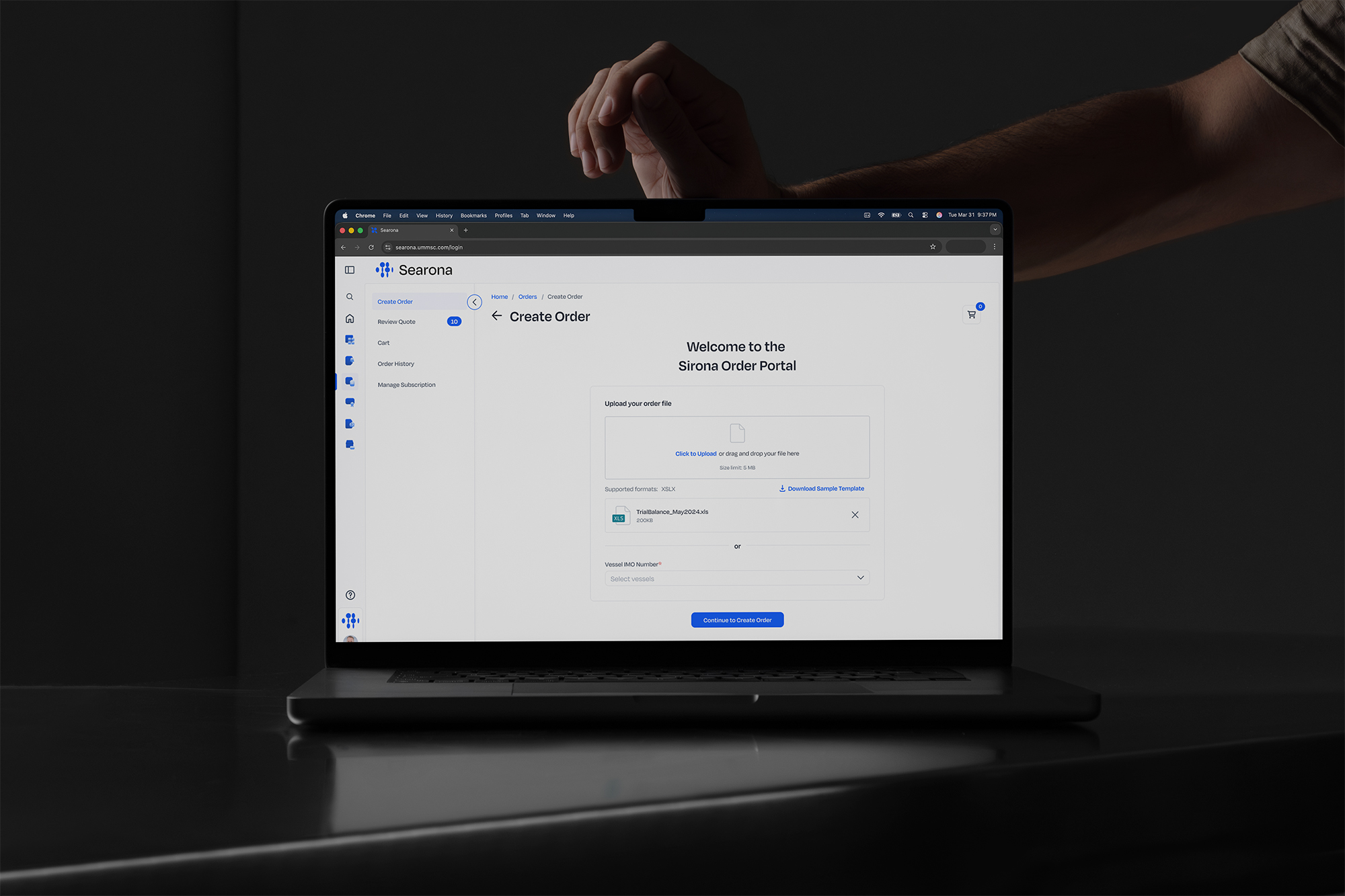
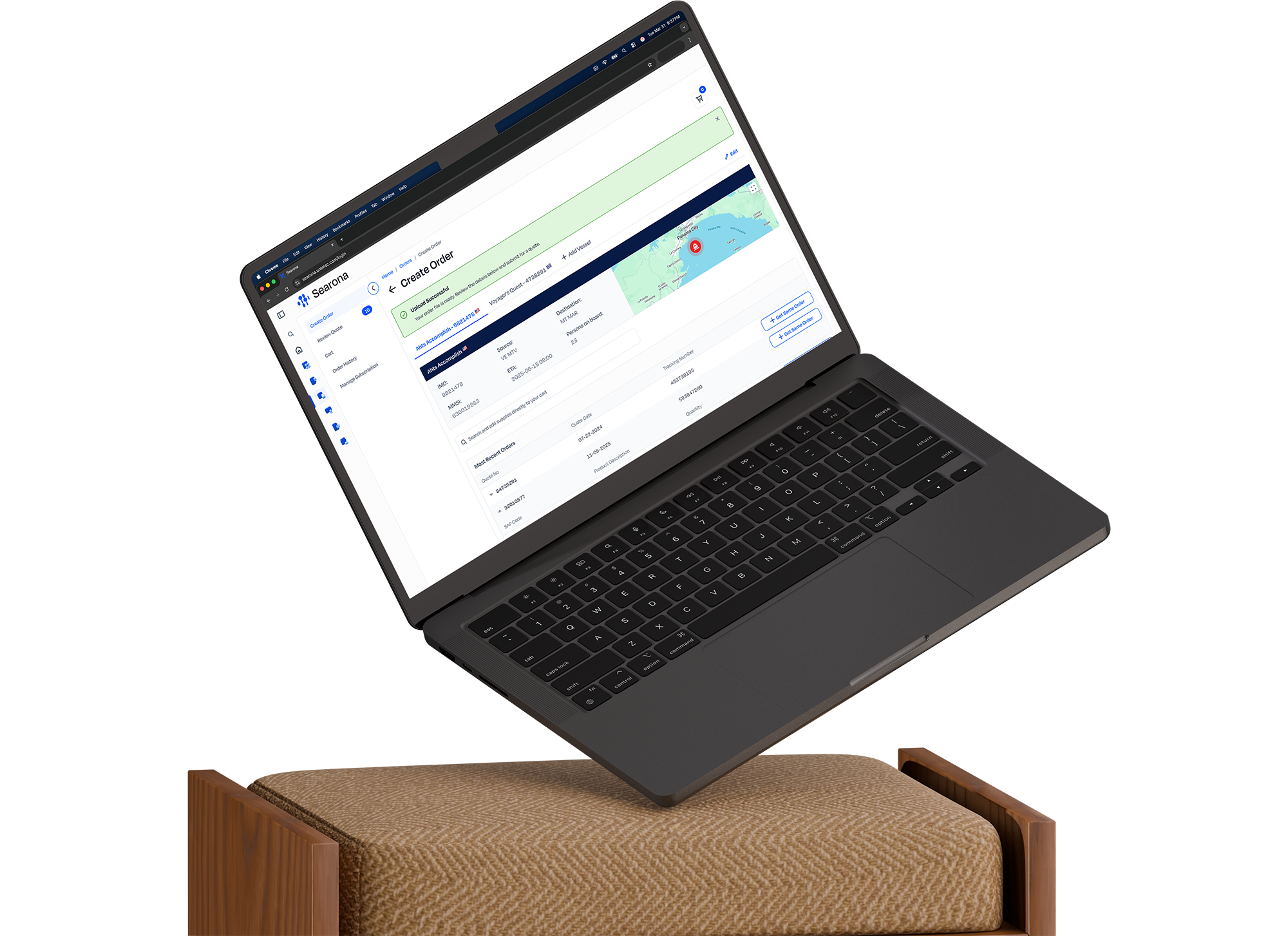
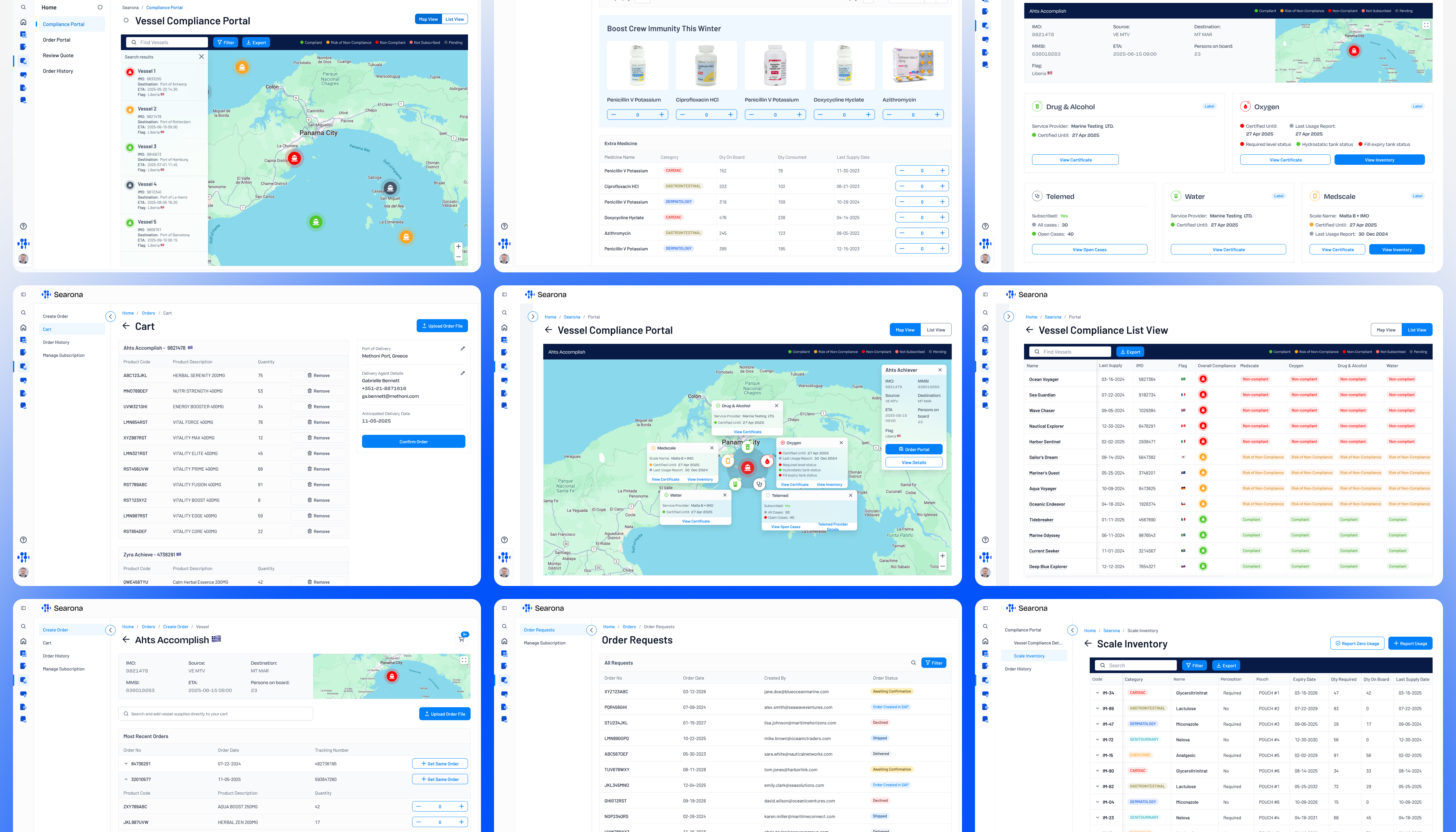
I redesigned the ordering experience into a structured, end-to-end workflow that replaces fragmented email communication with a centralized procurement process.
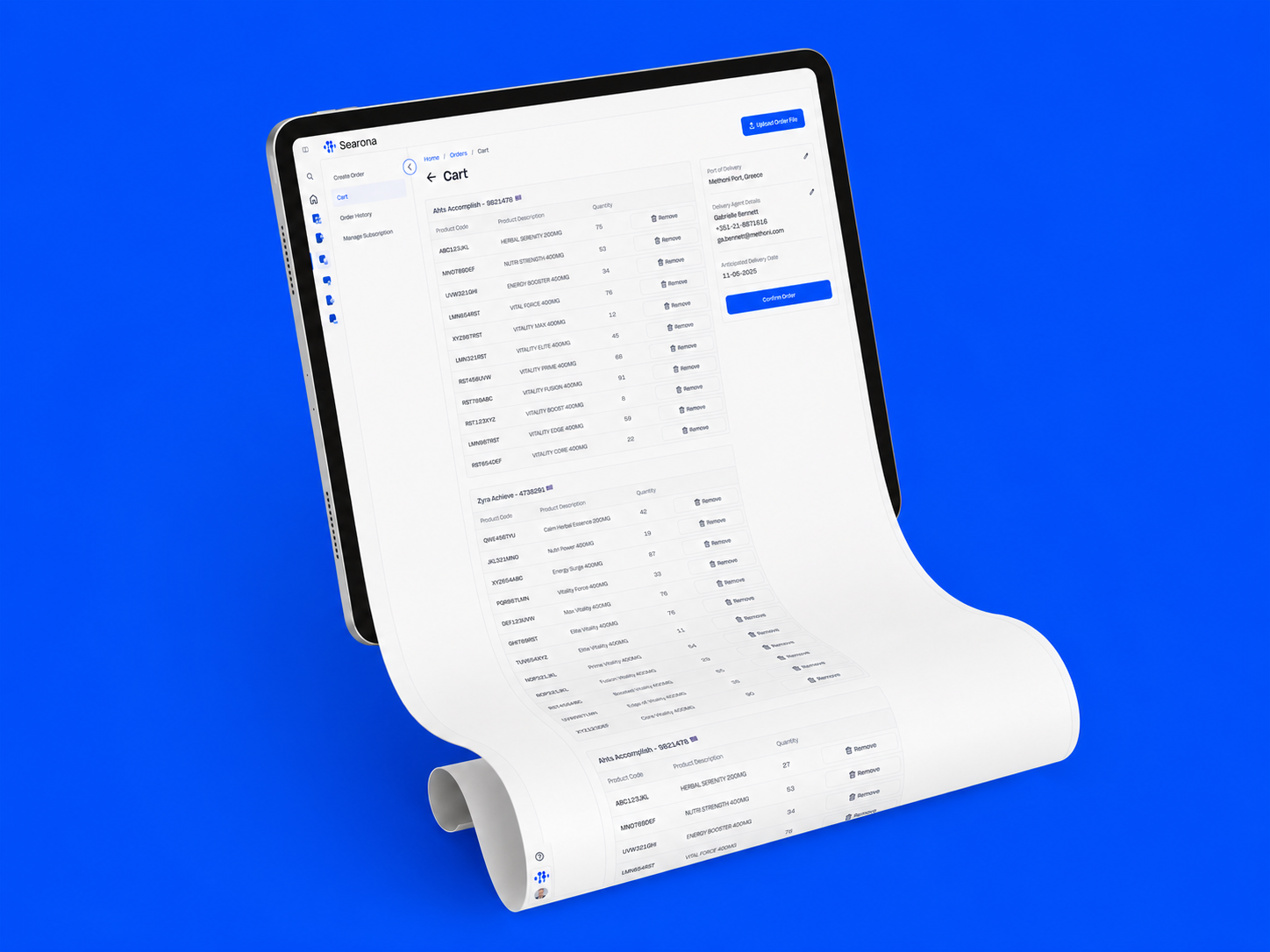
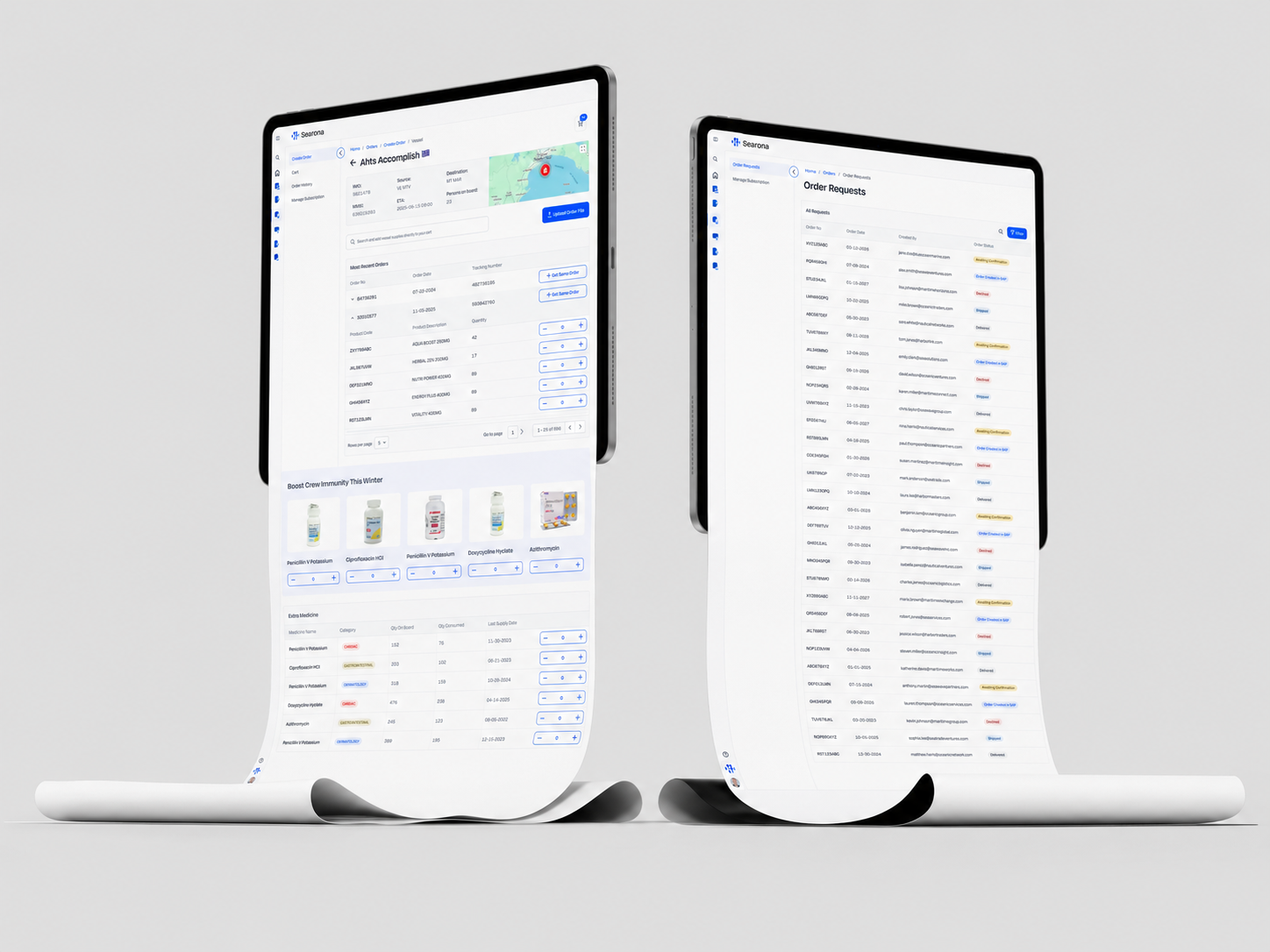
From creating requests and reviewing quotes to approving orders and tracking deliveries, the experience provides complete visibility while reducing administrative effort and improving collaboration between vessel crews, procurement teams, and Unimed operations.
Pillar C:
Triton Engine Smart Inventory Module
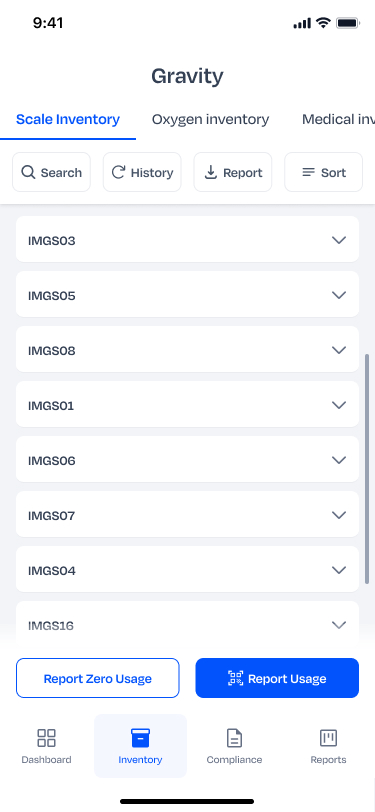
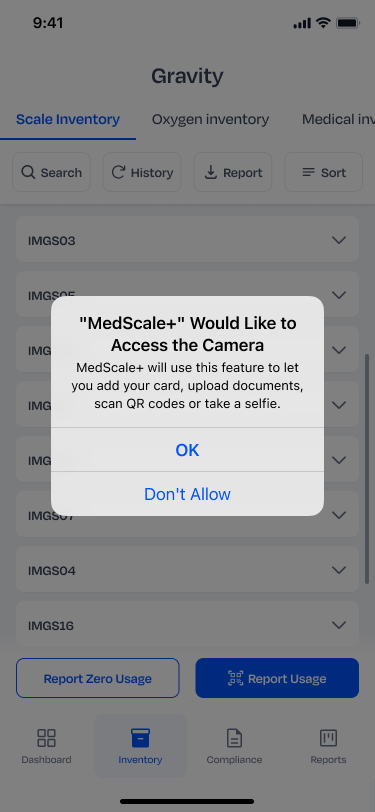
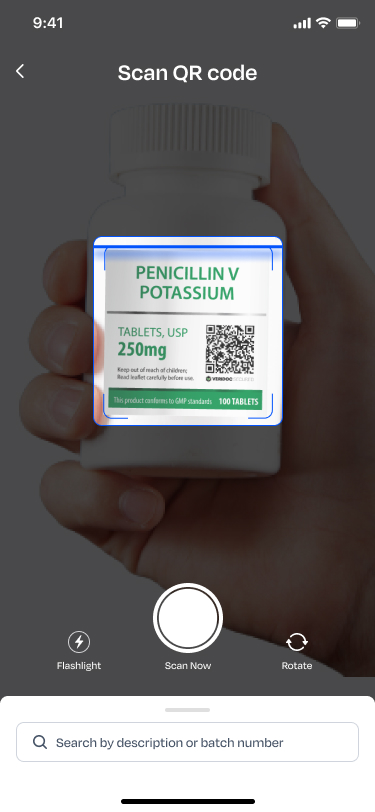
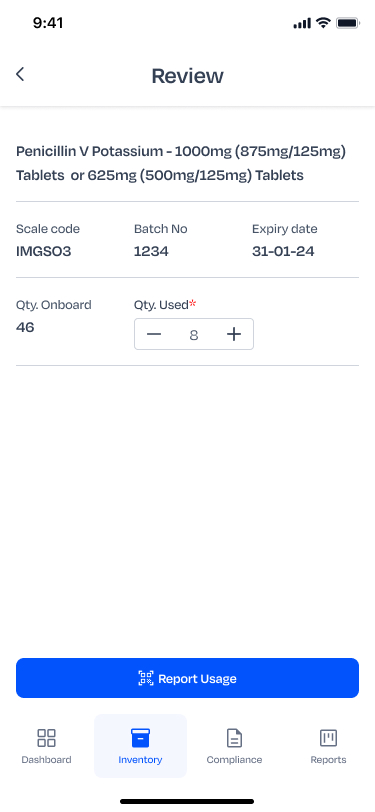
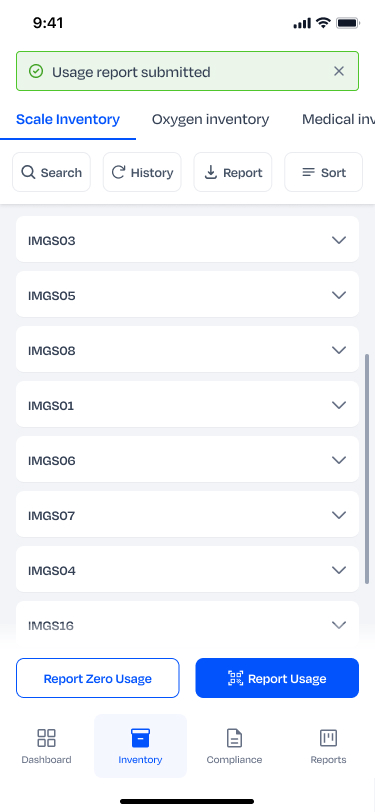
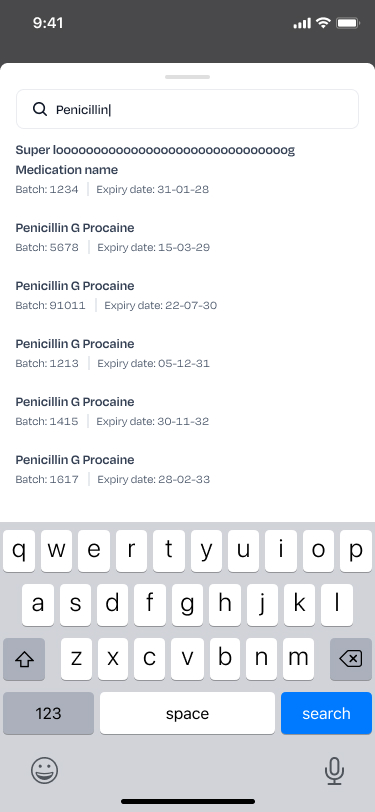
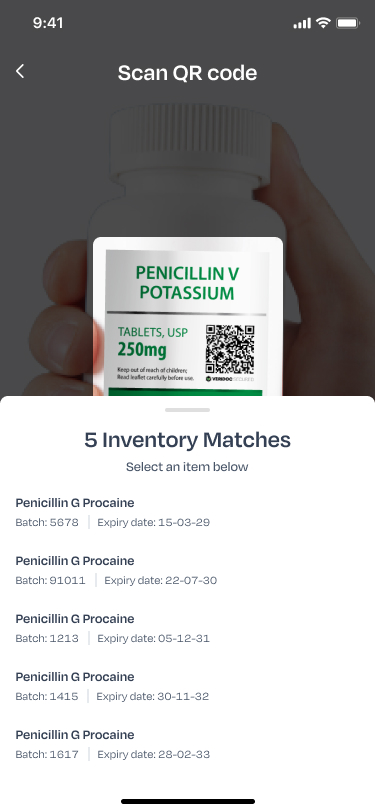
The Smart Inventory experience provides real-time visibility into onboard medical supplies through direct Triton integration. By surfacing stock levels, expiration dates, and replenishment recommendations, the platform enables proactive inventory planning, reduces waste, and helps fleets maintain medical readiness with greater confidence.
Design System & Technical Constraints
This project extended Olympus, Haptiq's enterprise design system, into a dedicated experience for Unimed. My role was to adapt the existing foundation into a branded product ecosystem that reflected Unimed's visual identity while supporting the unique operational requirements of maritime medical management.
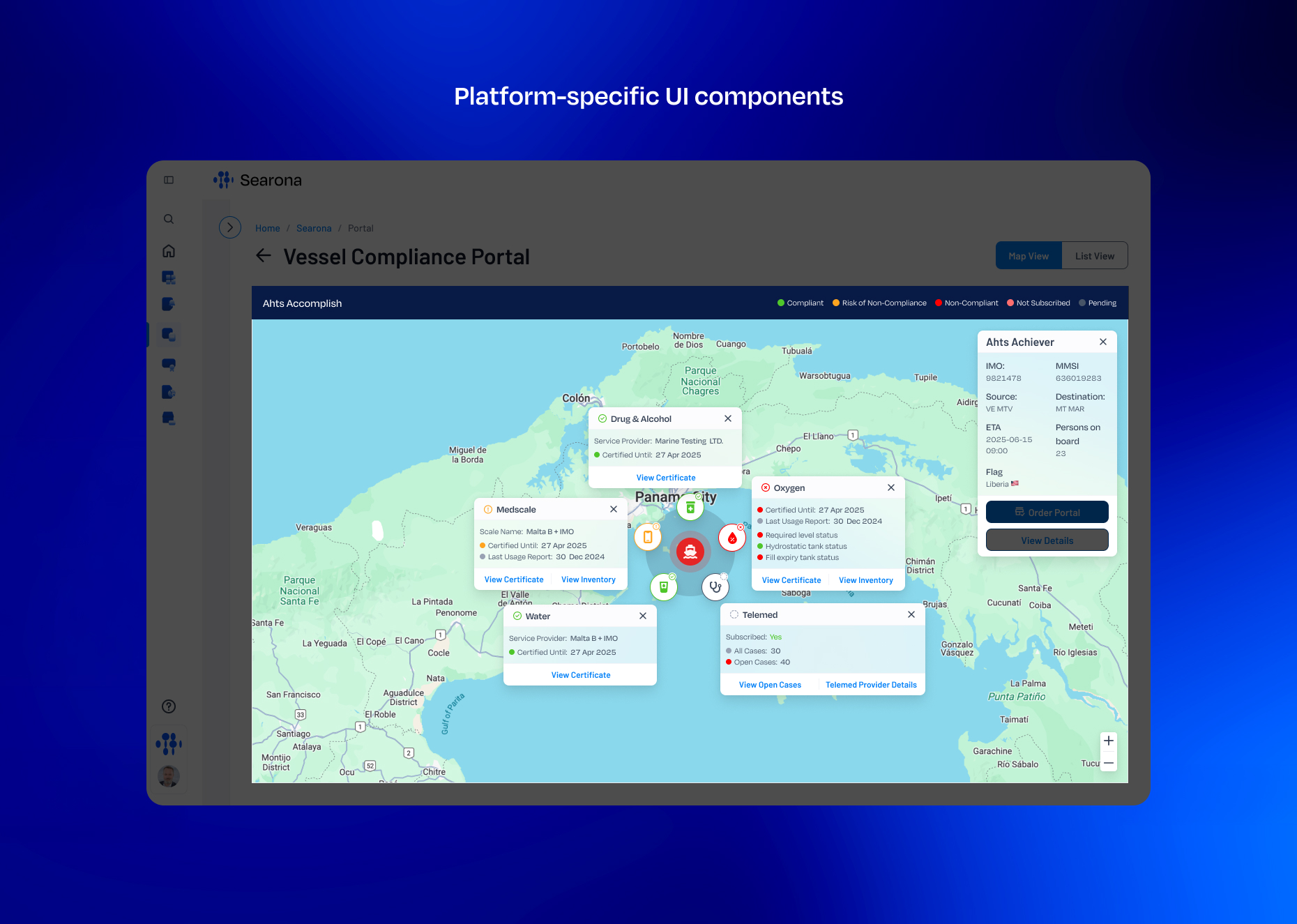
I customized the design language by incorporating Unimed's brand palette, typography, iconography, and visual identity, while introducing platform-specific components and interaction patterns tailored to compliance management, inventory operations, procurement workflows, and fleet monitoring.
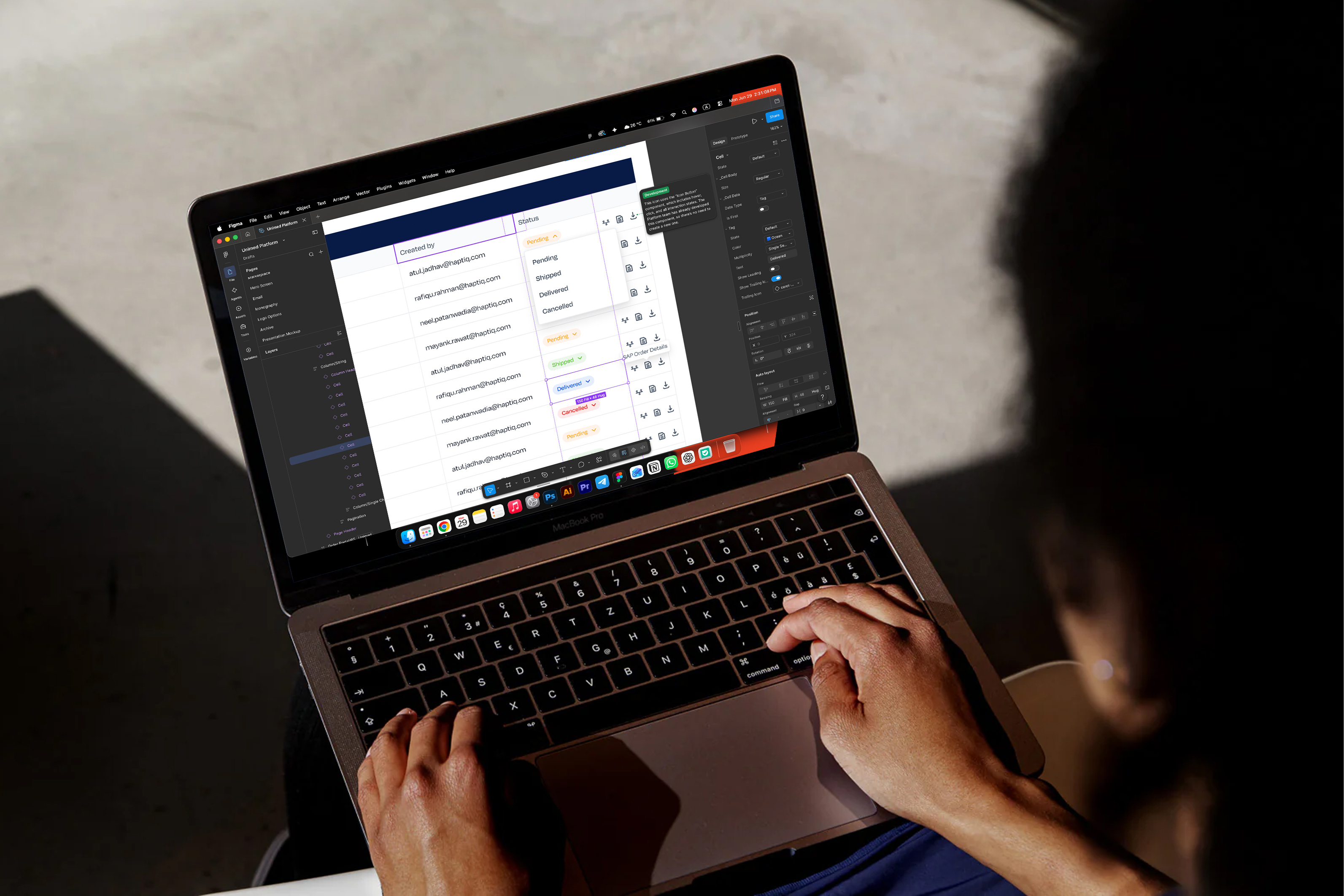
Building on an established design system allowed the team to maintain consistency across enterprise products while accelerating design and development through reusable components and standardized patterns.
Business Outcomes & Strategic Takeaways
By focusing on a systems-first layout over isolated page design, Searona provides a major operational upgrade. It transitions maritime healthcare operations from a fragmented, defensive admin task into an organized engine for strategic growth and data tracking.
4 chronological steps of client onboarding:

Key outcomes included:
Increased visibility
Reduced administrative burden
Improved compliance readiness
Better ship-to-shore coordination
Streamlined procurement workflows
Product Marketing & Launch
To support platform adoption, I designed not only the product experience but also the onboarding and launch ecosystem, ensuring users understood both the value and functionality of the platform.
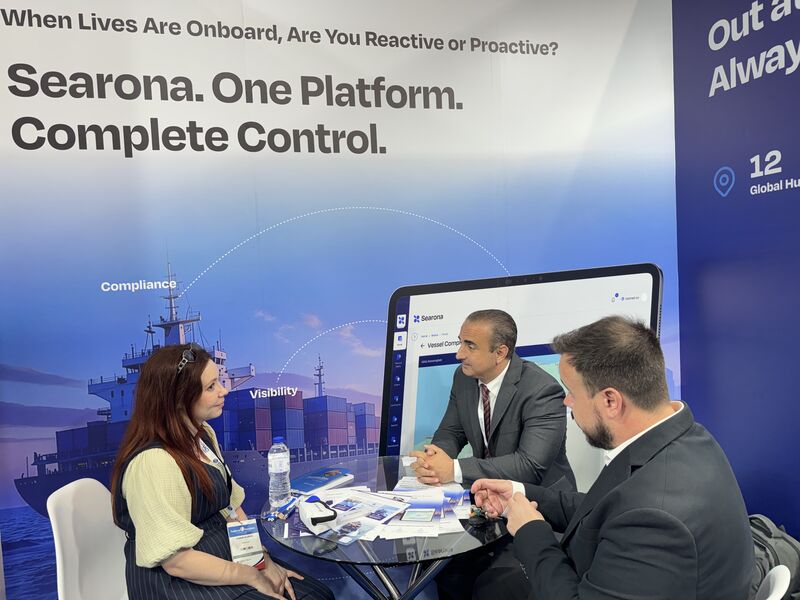
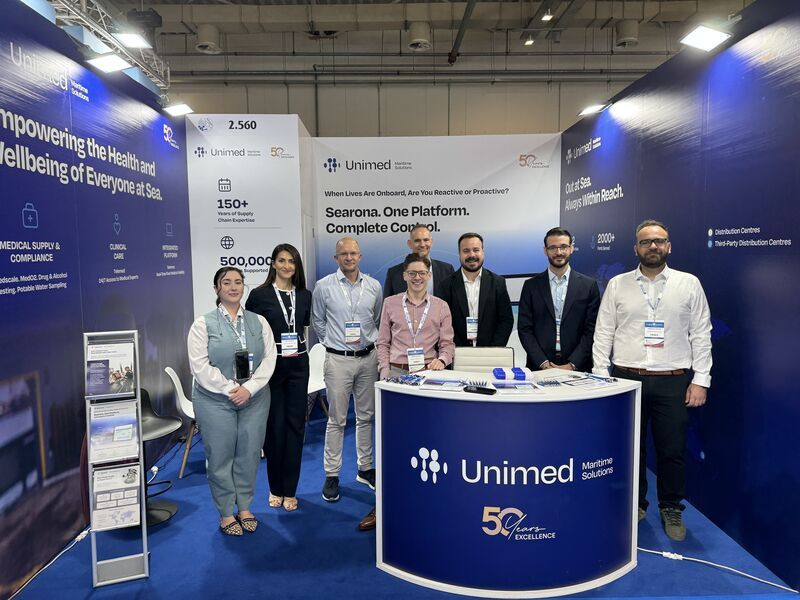
Booth design designed by me and Ally Noriega at Haptiq for Unimed at Posidonia 2026 in Greece.
